
Pediatric physical therapy exercises, often found in PDF formats, aim to enhance a child’s motor skills and development. These resources support early intervention and improved function.
What is Pediatric Physical Therapy?
Pediatric physical therapy is a specialized area of physiotherapy focused on the unique needs of infants, children, and adolescents. It addresses a wide range of conditions impacting movement and physical development. Therapists utilize various techniques, often documented in readily available PDF exercise guides, to improve gross and fine motor skills, balance, strength, and coordination.
These PDF resources frequently detail exercises designed to address developmental delays, neurological disorders like cerebral palsy, and genetic conditions such as Down syndrome; The goal is to help children reach their maximum potential, enabling them to participate fully in age-appropriate activities. PDFs provide accessible instructions for parents and caregivers to continue therapy at home, supplementing clinic visits and promoting consistent progress. A key aspect involves tailoring exercises to each child’s specific abilities and age, ensuring safety and effectiveness.
The Importance of Early Intervention
Early intervention in pediatric physical therapy is crucial for optimal developmental outcomes. Identifying and addressing motor skill deficits early on, often guided by PDF exercise programs, can significantly impact a child’s future abilities. The brain exhibits greater plasticity in early childhood, making interventions more effective during this period.
PDF resources detailing specific exercises allow parents and caregivers to begin therapeutic activities at home, even before a formal diagnosis. This proactive approach can prevent secondary complications and promote positive developmental trajectories. Access to these PDF guides empowers families to actively participate in their child’s therapy. Delaying intervention can lead to more significant challenges later in life, making early access to pediatric physical therapy exercises – often distributed as PDFs – incredibly valuable. Consistent, early support maximizes a child’s potential for independence and participation.
Common Pediatric Conditions Treated with Physical Therapy
Pediatric physical therapy exercises, often available as PDF guides, address conditions like cerebral palsy, Down syndrome, and developmental delays, improving motor function.
Cerebral Palsy & Physical Therapy
Physical therapy is a cornerstone of care for children with cerebral palsy (CP), aiming to maximize their functional abilities. Numerous PDF resources detail specific exercise programs tailored to varying CP presentations – spastic, dyskinetic, or ataxic. These exercises focus on improving muscle strength, range of motion, and coordination.
PDF guides often categorize exercises by skill area: gross motor (crawling, walking), fine motor (grasping, manipulating objects), and balance. They may include stretching protocols to manage spasticity, strengthening activities to combat weakness, and functional training to improve daily living skills.
Accessing these PDFs allows parents and therapists to implement consistent home programs. It’s crucial to remember that exercise selection should be individualized, considering the child’s specific needs and abilities, and always guided by a qualified physical therapist. Regular assessment and program adjustments are vital for optimal outcomes.
Down Syndrome & Exercise Programs
Children with Down syndrome often benefit significantly from targeted physical therapy, and readily available PDF exercise programs can be invaluable. These programs address common challenges like hypotonia (low muscle tone), ligamentous laxity, and developmental delays. PDF resources frequently outline exercises to strengthen core muscles, improve postural control, and enhance gross motor skills like sitting, crawling, and walking.
Many PDF guides emphasize early intervention, providing exercises suitable for infants and toddlers. These often include gentle range-of-motion activities, positioning techniques, and play-based exercises to encourage movement. Programs also address fine motor skills, crucial for self-care tasks.
It’s important to note that exercise programs should be individualized, considering each child’s unique strengths and weaknesses. Collaboration with a physical therapist is essential to ensure safety and effectiveness, and to adapt exercises as the child progresses. Consistent implementation, guided by professional advice, yields the best results.
Torticolllis and Plagiocephaly Exercises
Torticolllis (neck tilt) and plagiocephaly (flat head syndrome) are common conditions in infants often addressed with pediatric physical therapy. Numerous PDF resources detail specific exercises to correct these issues. These PDF guides typically focus on stretching the tight neck muscles in torticollis, encouraging head turning to the affected side, and promoting symmetrical movement.
For plagiocephaly, exercises often involve repositioning techniques during tummy time and encouraging the baby to look and reach in all directions. PDFs frequently illustrate proper positioning for feeding and sleep to alleviate pressure on the flattened side of the head. Parent education is a key component, with clear instructions and visuals.
Early intervention is crucial for both conditions. While PDFs offer valuable guidance, a physical therapist’s evaluation is vital to determine the severity and create a tailored exercise program. Consistent home exercises, as directed by a professional, are essential for optimal outcomes.
Developmental Delays: Addressing Motor Skills
Pediatric physical therapy plays a vital role in addressing developmental delays affecting motor skills. Many PDF exercise guides are available, categorized by developmental milestones – rolling, sitting, crawling, walking, and beyond. These resources provide targeted activities to strengthen weak muscles, improve coordination, and enhance overall movement patterns.
PDFs often include exercises focusing on core stability, balance reactions, and postural control, all crucial for typical development. They may also detail how to modify activities to suit a child’s specific needs and abilities. Visual cues and step-by-step instructions are common features, aiding parents and caregivers in implementing the exercises correctly.
It’s important to remember that a physical therapist’s assessment is paramount. A professional can identify the underlying causes of the delay and create a personalized plan. PDF resources should complement, not replace, expert guidance. Consistent practice, guided by a therapist, maximizes a child’s potential.

Key Exercise Categories & Techniques
Pediatric physical therapy exercises, often detailed in PDFs, encompass gross motor, fine motor, balance, and strength training. Techniques are tailored for optimal child development.
Gross Motor Skills Exercises
Gross motor skills, foundational for movement, are frequently addressed through pediatric physical therapy exercises detailed in downloadable PDF guides. These exercises focus on large muscle groups, improving abilities like crawling, walking, running, and jumping.
PDF resources often showcase activities such as assisted rolling for infants, encouraging weight-bearing through tummy time, and practicing transitions between sitting and standing. For toddlers, you’ll find exercises promoting walking with minimal support, stair climbing, and throwing/catching skills. Preschoolers benefit from activities like hopping, skipping, and obstacle courses.
Many PDFs provide progressions, starting with simpler movements and gradually increasing complexity. They emphasize the importance of repetition and positive reinforcement. Parents and caregivers can utilize these guides to implement exercises safely and effectively at home, supplementing professional therapy sessions. Remember to always consult with a physical therapist before starting any new exercise program.
Fine Motor Skills Exercises
Pediatric physical therapy exercises targeting fine motor skills, readily available in PDF formats, concentrate on small muscle movements crucial for dexterity and coordination. These exercises are vital for tasks like grasping, manipulating objects, and handwriting.

PDF guides frequently include activities like finger painting, building with blocks, stringing beads, and using playdough to strengthen hand and finger muscles. For older children, exercises may involve puzzles, lacing cards, and practicing scissor skills. Many resources emphasize bilateral coordination – using both hands together.
These PDFs often detail how to adapt exercises based on a child’s developmental level, offering modifications for those with limited hand strength or coordination. They highlight the importance of creating a playful and engaging environment to motivate participation. Consistent practice, guided by a therapist’s recommendations and outlined in the PDF, is key to improvement.
Balance and Coordination Exercises
Pediatric physical therapy exercises focused on balance and coordination, often detailed in accessible PDF guides, are fundamental for gross motor development and everyday activities. These exercises help children navigate their environment safely and efficiently.
PDF resources commonly feature activities like walking on a line, stepping over obstacles, playing catch, and riding a tricycle. More challenging exercises might include single-leg stance, hopping, and navigating obstacle courses. Many PDFs emphasize dynamic balance – maintaining stability while moving.
These downloadable guides frequently provide progressions, starting with supported exercises and gradually reducing assistance as the child improves. They also offer modifications for children with varying levels of ability. Proper form and a safe environment are consistently stressed within the PDF instructions, ensuring effective and injury-free practice.
Strength Training for Children
Pediatric physical therapy exercises incorporating strength training, readily available as PDF downloads, are crucial for building a strong foundation for movement and preventing injuries. These aren’t about “bulking up,” but rather developing functional strength.
PDF guides typically showcase bodyweight exercises like animal walks (bear crawls, crab walks), squats, lunges (modified as needed), and push-ups against a wall or incline. Resistance bands are also frequently utilized, offering adjustable levels of challenge. Emphasis is placed on proper form to avoid strain.
Many PDF resources detail age-appropriate progressions, starting with simpler movements and gradually increasing resistance or complexity. They often include visual aids and clear instructions. Safety is paramount; PDFs consistently advise supervision and modifications based on the child’s individual needs and abilities, ensuring a positive and effective experience.

Finding & Utilizing Pediatric Physical Therapy Exercise PDFs
Pediatric physical therapy exercise PDFs are accessible through reliable sources, offering convenient access to guided programs. Careful review and adaptation are key!
Reliable Sources for PDF Downloads
Finding trustworthy pediatric physical therapy exercise PDFs requires careful consideration. Several organizations offer valuable resources. Hospital websites, particularly those with pediatric rehabilitation departments, frequently provide downloadable exercise guides tailored to specific conditions.
Professional associations like the American Physical Therapy Association (APTA) often link to evidence-based resources, though direct PDF downloads may be limited, directing users to member content. University medical centers and children’s hospitals are excellent sources, often publishing patient education materials in PDF format.
Be cautious when downloading from general websites; prioritize sources with clear authorship and medical oversight. Look for PDFs created or reviewed by licensed physical therapists. Always verify the information aligns with your child’s specific needs and consult with their therapist before implementing any new exercise program. Remember to check the date of publication to ensure the exercises are current with best practices.
Understanding Exercise Instructions in PDFs
Pediatric physical therapy exercise PDFs often contain specific terminology and detailed instructions. Pay close attention to illustrations or accompanying videos, as visual cues are crucial for correct form. Understand the frequency (how often), intensity (how hard), and duration (how long) of each exercise.
PDFs will typically indicate the child’s developmental level the exercise is suited for. Note any modifications suggested for different abilities. Look for clear warnings or precautions regarding potential risks. If instructions are unclear, do not proceed without clarification from your child’s physical therapist.
Many PDFs include sections on proper positioning and handling techniques. Ensure you understand these to provide safe and effective support. Be aware of cues to stop the exercise if your child experiences pain or discomfort. Remember, a PDF is a guide; personalized instruction from a qualified therapist is essential for optimal results.
Adapting Exercises Based on Child’s Age & Ability
Pediatric physical therapy exercise PDFs rarely offer a ‘one-size-fits-all’ approach. Adaptation is key! For infants, exercises may focus on gentle movements and positioning, requiring significant parental assistance. Toddlers need more engaging activities, often incorporating play. Preschoolers can handle more complex tasks, but still require supervision.
Consider your child’s specific abilities. If an exercise is too challenging, simplify it – reduce repetitions, shorten the duration, or provide more support. Conversely, if it’s too easy, increase the difficulty gradually. Always prioritize proper form over completing a set number of repetitions.
PDFs may suggest modifications, but your physical therapist is the best resource for tailoring exercises. They can assess your child’s progress and adjust the program accordingly. Never push your child beyond their comfort level, and always monitor for signs of fatigue or pain.

Specific Exercises & Their Applications (PDF Focus)
Pediatric physical therapy exercise PDFs detail age-specific activities. These range from infant tummy time to toddler gait training, promoting developmental milestones and functional skills.
Exercises for Infants (0-6 months) — PDF Examples
PDF resources for infants (0-6 months) frequently showcase exercises targeting early motor development. Common examples include supervised tummy time to strengthen neck and upper body muscles, crucial for head control. Gentle range-of-motion exercises, guided by a physical therapist, are often detailed to improve joint flexibility and prevent stiffness.
Many PDFs illustrate how to facilitate rolling, transitioning from back to tummy and vice versa, promoting core strength and coordination. Parent education materials emphasize safe positioning techniques and appropriate handling. Exercises to encourage reaching for toys are also prevalent, fostering visual tracking and hand-eye coordination.
These PDF guides often include modifications for pre-term infants or those with specific conditions, like torticollis. Detailed illustrations and step-by-step instructions ensure parents understand proper technique, maximizing benefits and minimizing risk. Remember to always consult with a qualified pediatric physical therapist before starting any exercise program.
Exercises for Toddlers (6-24 months) ⎻ PDF Examples
PDF exercise guides for toddlers (6-24 months) typically focus on developing gross motor skills like walking, running, and climbing. You’ll find examples of obstacle courses designed to improve balance and coordination, often utilizing household items. Strengthening exercises, such as squats and step-ups (with assistance), are frequently included to build leg strength.
Many PDFs detail activities to enhance dynamic balance, like walking on a low beam or navigating uneven surfaces. Exercises promoting core stability, such as animal walks (bear crawls, crab walks), are common. These resources often emphasize playful engagement to motivate toddlers during therapy.
PDF materials also address emerging fine motor skills, with suggestions for activities like stacking blocks, stringing beads, and scribbling. Parent handouts often provide modifications for varying developmental levels and highlight safety precautions. Always seek guidance from a pediatric physical therapist before implementing any new exercise routine.
Exercises for Preschoolers (2-5 years) — PDF Examples
PDF resources for preschoolers (2-5 years) emphasize building upon foundational motor skills. Expect to find exercises targeting hopping, jumping, skipping, and galloping – crucial for developing coordination and agility. Many PDF guides incorporate games like “Red Light, Green Light” to make exercise fun and engaging.
Strength training exercises become more complex, including activities like push-ups (modified on knees), animal walks with variations, and carrying light objects. Balance activities, such as walking on a line or standing on one foot, are frequently detailed, often with progressive challenges.
PDF materials also address pre-writing skills through fine motor exercises like tracing shapes, coloring, and using playdough. Handouts often include visual cues and clear instructions for parents. Remember to consult a physical therapist to tailor exercises to a child’s specific needs and abilities, ensuring safe and effective implementation.
Safety Considerations & Precautions
PDF exercise guides require constant supervision. Modify activities based on the child’s ability to prevent injury, and consult a therapist for concerns.
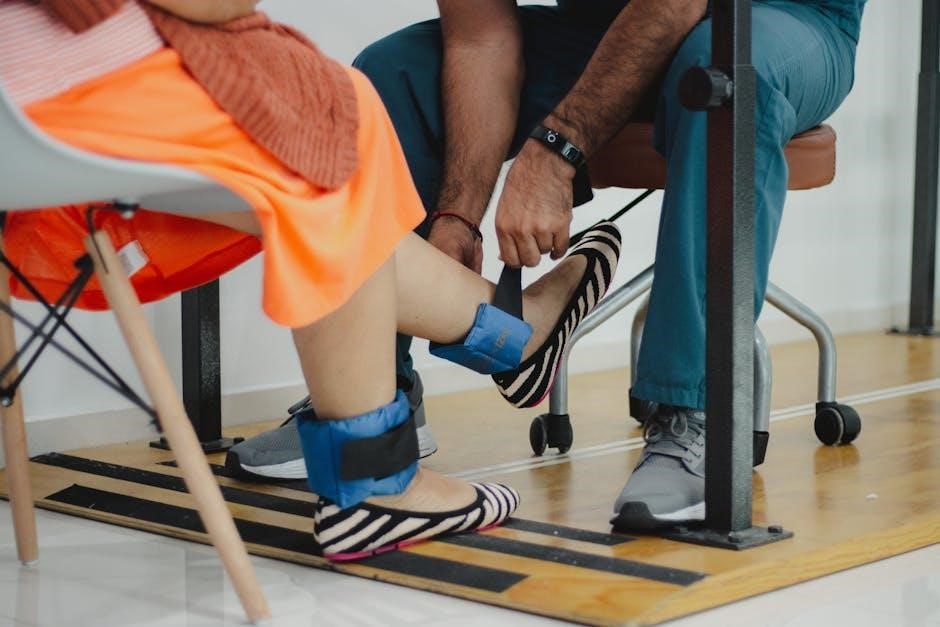
Supervision During Exercise
Constant supervision is paramount when implementing pediatric physical therapy exercises, especially when utilizing instructions from PDF resources. Children may not fully understand or adhere to proper form, potentially leading to incorrect movements and increased risk of injury. A caregiver or therapist should actively observe the child throughout each exercise session.
This supervision isn’t merely about preventing falls; it’s about ensuring the exercise is performed correctly to maximize its therapeutic benefit. The supervisor should provide gentle guidance and encouragement, correcting any deviations from the instructed technique. Furthermore, be attentive to the child’s cues – signs of fatigue, pain, or discomfort should immediately halt the exercise.
PDF guides often lack the personalized adjustments a therapist would provide, making vigilant oversight even more crucial. Ensure the environment is safe, free from obstacles, and conducive to focused movement. Never leave a child unattended while they are performing these exercises.
Modifying Exercises to Prevent Injury
When utilizing pediatric physical therapy exercises from PDF guides, remember that these are general recommendations. Individual needs vary significantly, and modifications are often essential to prevent injury. Consider the child’s age, developmental level, and specific condition when adapting exercises.
Simplification is key. If an exercise proves too challenging, break it down into smaller, more manageable steps. Reduce the range of motion, decrease the number of repetitions, or provide increased support. Conversely, if an exercise is too easy, gradually increase the difficulty – but only under the guidance of a physical therapist.
Pay close attention to the child’s response. Any sign of pain, discomfort, or excessive fatigue warrants immediate modification or cessation of the exercise. PDF instructions cannot account for individual limitations; therefore, prioritize safety and adjust accordingly. Always err on the side of caution and consult with a professional if unsure.
When to Consult with a Physical Therapist
While pediatric physical therapy exercises available in PDF format can be valuable tools, they are not a substitute for professional evaluation and guidance. Consult a physical therapist if you notice persistent developmental delays, significant limitations in movement, or if your child experiences pain during exercises.
Specifically, seek professional help if a child consistently struggles with exercises outlined in a PDF, or if their condition worsens despite following the instructions. A therapist can accurately diagnose the underlying issue and create a tailored exercise program.
Furthermore, if you are unsure about proper form or modification techniques, a consultation is crucial. PDFs offer general guidance, but a therapist provides personalized instruction and ensures exercises are performed safely and effectively. Don’t hesitate to seek expert advice to optimize your child’s progress and prevent potential injuries.